Blog
Sales isn’t an assembly line

Oliver Christensen
Head of GTM
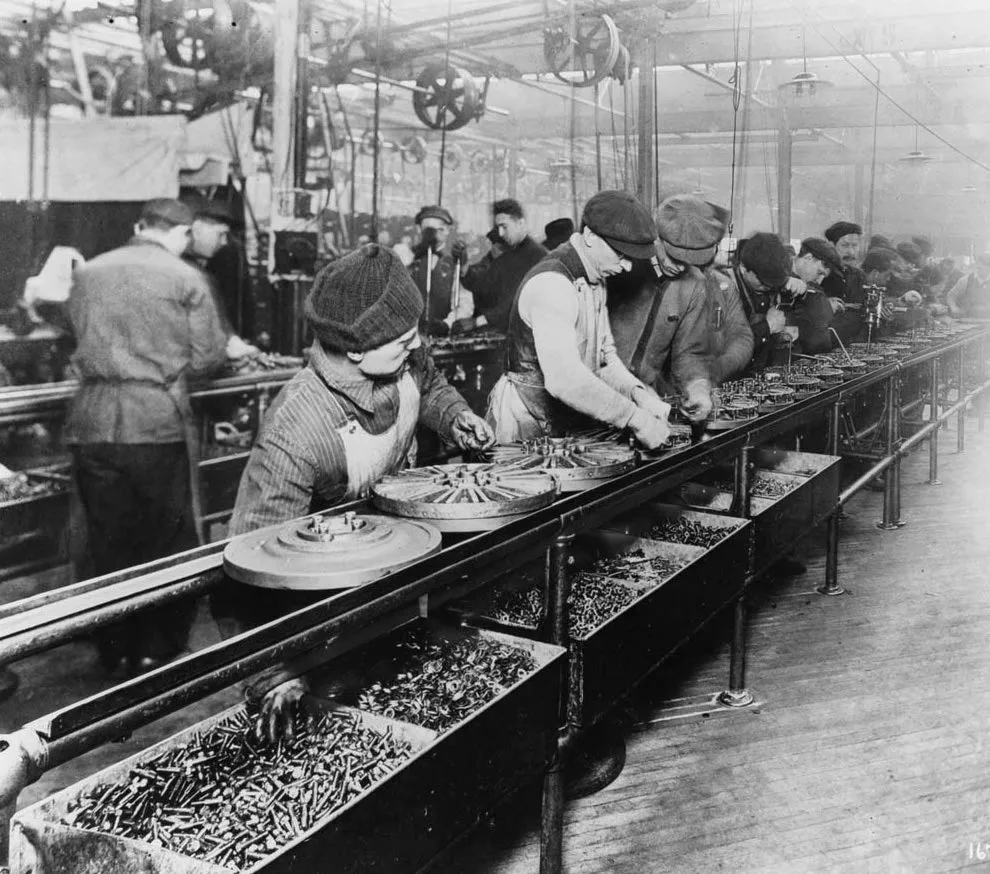
Great software companies require someone to build the product, and someone to bring it into the world. We've spent decades turning product-building into a highly regarded profession with clear career paths, idolised practitioners, and a culture that treats building as the highest-status work there is. Meanwhile, bringing the product into the world we industrialised to the lowest common denominator.
This is why the sharpest people you know can tell you exactly how to become a great engineer, yet almost none of them have ever seriously considered sales. So the ones who would be brilliant at sales get routed to consulting, banking, VC, and strategy roles with impressive names. Paths that sound commercial and feel safe, but where you can spend a decade never really owning anything meaningful. The startup world now overproduces people who can sit next to important people and say things that sound clever, while it underproduces people who can actually grow a company.
And the timing could not be worse. Sales has quickly become the most important role at every company. Products are increasingly built for the customers you have, as opposed to customers acquired for the product you built. The need has never been higher for people who can figure out how to win new markets, work directly with C-suites and Founders, and be trusted to design the solution to their most complex problems.
The assembly line
Decades of hyper-specialisation at software companies have led to a setup that no customer would've ever designed. One person schedules meetings they'll never attend. Another runs demos for people they didn't pick with scripts they had no input on, and then hands the customer to a third person they'll never speak to again. Around them sit specialists for pricing, specialists for enablement, specialists for measuring it all.
The assembly line exists because it allowed companies to hire mediocre people, made revenue predictable, and sellers replaceable. Every role is optimised so that anyone could do it. That is what assembly lines are for.
You've felt the result from the other side. Software is now plagued by companies where your primary contacts know less about their own product than you do, and the only reason you'd ever talk with them is that they won't let you use the product if you don’t. Somewhere in the endless specialisation, sales stopped being a helping hand to get the most out of the product and became a barrier in front of it.
The separation of strategy and execution leads to a complete lack of ownership. The person who designs the strategy never runs a deal, and the people running deals had no say in the strategy. Nobody can truly figure out how to win a market they aren't personally in.
No wonder the brightest people opted out.
A team of Founders
In every other high-performing industry, sales is the most prestigious job. Look at law firms, investment banks, and consultancies - the "salespeople" are the most impressive people in the organisation, and you rarely get to do sales until you've mastered all other aspects. Software might look like the exception, but it isn't. Great sales just lives here under a different job title.
Founders pick a market with a set of issues that they are opinionated about how to solve. They then do everything they can to build relationships with strangers, to understand their issues, to solve them in the best way possible, and to stay personally involved until they're actually solved. Startups never take off on their own. Founders make them take off, one recruited user at a time.
Founding a company is just sales. The reason nobody says so is that "sales" got defined down to the assembly-line version, and no ambitious person wants to be another cog. So the whole loop went unclaimed - today you rarely see anyone own it who isn't the founder themselves.
The whole version is the most idolised work in tech. And you don't need to bet five years on your own idea to learn it. You need a company early enough that the engine isn't built yet, selling something real enough that the best companies in the world take the meeting.
How we're building full-stack sellers
The assembly line fails to develop truly great sales leaders - the kind who can be trusted by the smartest people at the greatest companies to solve their most complex issues. For this you need real ownership, bias for action, and guidance from people who've done it before. I've onboarded a lot of sellers, and everything I know about developing them reduces to three questions. How quickly are you doing the real job? How tight is the feedback loop once you are? And how do I make you act like a Founder? Everything else is noise.
Information only sticks when you use it. Therefore you won’t spend the first couple of weeks going through a reading list, but instead talk with prospects on day one. From there its all about doing everything to the best of your ability while having someone adjusting you when you go wrong. You won’t just follow a script or call a list, instead you’ll own a real market and develop real conviction in how we win.
We've built a product that wins. No other solutions works for fast-moving startups. This is why many of the fastest-moving and most beloved companies in the world have chosen an 8-person startup to ensure they can provide exceptional customer experiences at scale. Today this includes Cursor, Lovable, Replit, Supabase, and many more.
We’re now at the inflexion point where we can win almost every deal we’re in. Yet our ambitions are far higher than what one person can handle.
Want to hear more? This is a sales role, do your thing.